Why People Are Seeking Ayahuasca Retreat Near Las Vegas and What They Don’t Expect Going In
Las Vegas has always attracted people looking for intensity. Bright lights, fast money, reinvention, escape. For some, it is a playground. For others, it is a place where coping mechanisms slowly stop working. In recent years, a quieter movement has been growing beneath the surface. People are no longer coming just to forget. They are coming to remember.
More and more individuals are searching for an ayahuasca retreat near Las Vegas. Not Peru. Not the jungle. Right here in the desert. The reasons vary, but the pattern is familiar. Something is no longer sustainable. Anxiety has crept in. Depression feels heavier. Old trauma is resurfacing. Therapy helped, but not all the way. Meditation helped, but something still feels blocked.
So they start asking questions. What is ayahuasca? Is it safe? Is it legal? Why are people talking about ceremonies instead of sessions? And what actually happens when the lights go out and the work begins?
What most people do not expect is that the ceremony is not the hardest part. It is what comes after that changes everything.
This is where faith-based communities like 963 Tribe Church enter the picture. Not as a quick fix, not as a trend, but as a structured spiritual container rooted in responsibility, preparation, and integration.
Why Las Vegas Has Become a Surprising Place for Ayahuasca
At first glance, Las Vegas seems like an unlikely home for sacred ceremony. But if you look closer, it makes sense.
Vegas attracts people in transition. Divorce, grief, burnout, addiction, success that feels hollow. It is a city full of people trying to outrun something, or finally face it. The desert holds that tension well. Silence is never far away here.
People searching for ayahuasca in Las Vegas are often not looking for novelty. They are looking for grounding. Traveling to South America is not accessible or realistic for everyone. Time, money, health, family responsibilities all play a role. A local ayahuasca retreat in the USA removes some barriers, but it raises new questions around safety, legitimacy, and intention.
That is why many seekers gravitate toward established religious communities rather than underground or loosely organized psychedelic retreats.
963 Tribe Church operates openly as a 501(c)(3) religious institution under the 508(c)(1)(A) provision. Their ceremonies are framed as religious sacraments, not recreational experiences. That distinction matters, both legally and spiritually.
What People Think Ayahuasca Will Be Like
Most people arrive with a story already written in their heads.
They expect visions. Answers. A dramatic purge that somehow cleans the slate. Some imagine a spiritual highlight reel. Others are bracing for a nightmare they believe they must survive to earn healing.
Social media does not help. Clips, quotes, and secondhand stories rarely show the full arc. What they leave out is context, preparation, and what it means to sit in ceremony with humility rather than control.
Ayahuasca is not entertainment. It is not therapy in the conventional sense either. It is a sacrament used within a religious framework that asks something of you. Discipline. Honesty. Responsibility.
At 963 Tribe Church, preparation begins weeks before the ceremony. Diet changes, substance abstinence, mental and emotional clearing. These are not arbitrary rules. They are part of learning how to listen.
The restrictions are clear and specific because the body and nervous system matter. SSRIs, MAOIs, hypertension medications, and certain stimulants must be discontinued well in advance. Participants are required to consult their physician and disclose all relevant medical information to facilitators.
This is not about pushing people through the door. It is about keeping the container safe.
What Ayahuasca Actually Is, Beyond the Myths
Ayahuasca, often referred to as Madre Medicina or Grandmother Spirit, is a traditional plant sacrament used for centuries by Indigenous communities of the Amazon. It is prepared from the Banisteriopsis caapi vine and the leaves of the chacruna plant.
Within this tradition, ayahuasca is understood as a teacher, not a substance. It does not work on your timeline or according to your preferences. It brings contrast. Bliss and discomfort. Insight and confrontation. Sometimes in the same hour.
One of the most misunderstood aspects of ayahuasca is that it can feel like it wounds you in order to heal you. Old memories surface. Emotions long buried come into the light. The medicine does not create these things. It reveals what is already there.
People seeking relief from depression, anxiety, PTSD, or addiction often arrive hoping the ceremony will remove their pain. What they learn instead is that pain often carries information.
This is where experienced facilitation becomes critical.
The Role of the Facilitators and the Container
At 963 Tribe Church, ceremonies are guided by experienced facilitators trained to prioritize safety, consent, and integration. The facilitators do not act as gurus or healers who fix you. Their role is to hold the space while you do your own work.
The container is structured. Silence is maintained. Movement is minimal. Phones and distractions are removed. Participants are required to stay within the ceremonial grounds until completion, with guardians available for support if someone needs grounding or space.
Music, particularly traditional icaros inspired by Shipibo lineage, plays a central role. These songs are not background ambiance. They are considered energetic tools that help guide and stabilize the process.
963 Tribe Church also shares ceremonial music beyond the physical space. Their sound work and teachings can be explored through their YouTube channel
What People Do Not Expect: The Ceremony Is Only the Beginning
If there is one consistent surprise, it is this. The ceremony does not end when the lights come back on.
Integration is where people realize whether they came for insight or for transformation.
After ceremony, emotions remain open. Sensitivity is heightened. The nervous system is recalibrating. This is why post-ceremony guidelines matter just as much as preparation.
Participants are encouraged to avoid alcohol, caffeine, heavy foods, sexual activity, overstimulation, and chaotic environments for days or weeks after. This is not about restriction. It is about protecting something fragile and new.
963 Tribe Church offers dedicated integration support to help participants ground their experiences into daily life. Journaling, nature, reflection, and community dialogue are emphasized.
You can explore their integration resources here:
resources
integration
This is also where many people realize that ayahuasca did not give them answers. It gave them responsibility.
Why Community Matters More Than the Medicine
Another surprise for many is the role of community. People often arrive thinking this is a solo journey. What they discover is that healing in isolation rarely lasts.
963 Tribe Church places strong emphasis on belonging. Integration circles, community gatherings, shared meals, and ongoing spiritual education create continuity beyond a single ceremony.
This matters because insights fade without support. Patterns return when there is no accountability. Community does not replace personal work, but it makes it sustainable.
If you want to understand the heart of the community, you can explore these pages:
https://963tribe.com/tribe
https://963tribe.com/get-involved
https://963tribe.com/calendar
Their social platforms also offer a glimpse into real gatherings, not curated highlights.
Instagram:
instagram
Legal and Ethical Realities People Often Overlook
Many people searching for ayahuasca in the USA assume legality is simple. It is not.
963 Tribe Church operates under constitutional protections afforded to religious institutions, including the Religious Freedom Restoration Act. Their sacraments are used strictly within religious ceremonies, never recreationally.
Participants are required to sign liability waivers and understand that personal responsibility is part of participation. Transparency matters. There are no guarantees, no promises of cures, and no pressure to participate beyond one’s readiness.
This level of clarity builds trust, even when it asks more of the participant.
Why People Keep Coming Back, Even When It Is Hard
Not everyone finds ayahuasca easy. Many describe it as one of the most challenging experiences of their lives. And yet, people return.
They return because something feels more honest afterward. Less numbing. Less avoidance. A deeper relationship with self, with God, with the earth.
963 Tribe Church frames healing not as the end goal, but as a clearing. The real invitation is to celebrate life more fully, with fewer masks and more responsibility.
That perspective resonates with people who are tired of chasing peak experiences and ready to build a grounded spiritual life.
Beyond Ayahuasca: Other Sacred Offerings
For those exploring plant medicine more broadly, 963 Tribe Church also offers other sacramental ceremonies, each with its own context and purpose.
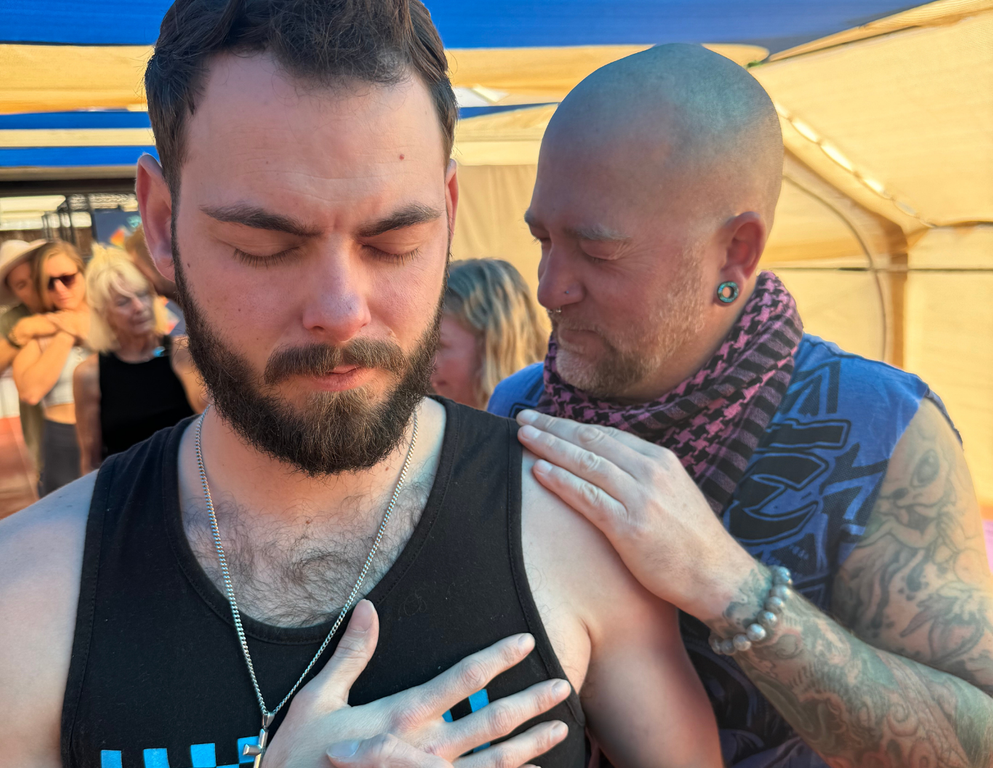
Additional practices such as hape, sananga, and cacao
Each offering is approached with the same emphasis on safety, reverence, and integration.
A Different Kind of Retreat Experience
What sets a faith-based ayahuasca retreat apart from many psychedelic retreats is accountability. There is no promise of escape. No shortcut to enlightenment. No separation between ceremony and daily life.
Participants are asked to prepare seriously, show up fully, and integrate honestly.
Some leave realizing they are not ready yet. Others leave knowing they have work to do. A few leave with a sense of peace they have not felt in years.
All leave changed in some way, often quieter than they expected.
Final Thoughts
People are seeking ayahuasca near Las Vegas because the old ways of coping are breaking down. Because the noise is exhausting. Because something deeper is calling.
What they do not expect is that the medicine does not meet them halfway. It asks them to meet themselves fully.
Communities like 963 Tribe Church exist not to sell transformation, but to steward it responsibly. With structure. With humility. With faith.
If you are curious, start by learning, not by rushing. Read. Reflect. Ask questions. Explore the resources available.
And if you feel called, step forward with respect for the path and for yourself.
