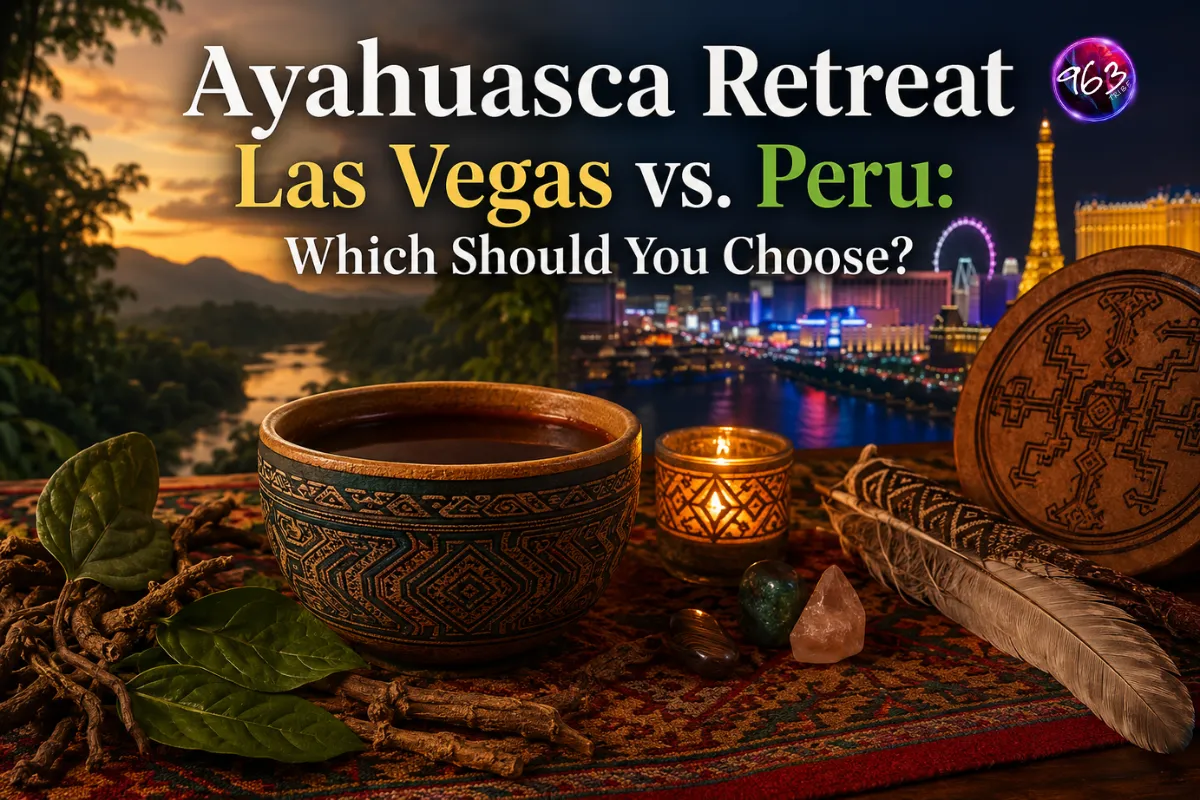
Ayahuasca Retreat Las Vegas vs. Peru: Which Should You Choose?
You don't need a plane ticket to the Amazon to sit in a ceremony built on Shipibo tradition. 963 Tribe Church, a Las Vegas-based 501(c)(3) religious institution, holds ayahuasca ceremonies under the direct guidance of Shipibo lineage teachings from Pucallpa, Peru. So the question isn't really "Is Las Vegas as good as Peru?" It's "What am I actually looking for from this experience?" One path gives you full immersion in the jungle where the tradition began. The other gives you the same lineage, closer to home, with people you can keep showing up for month after month.
Where Does the Difference Actually Show Up?
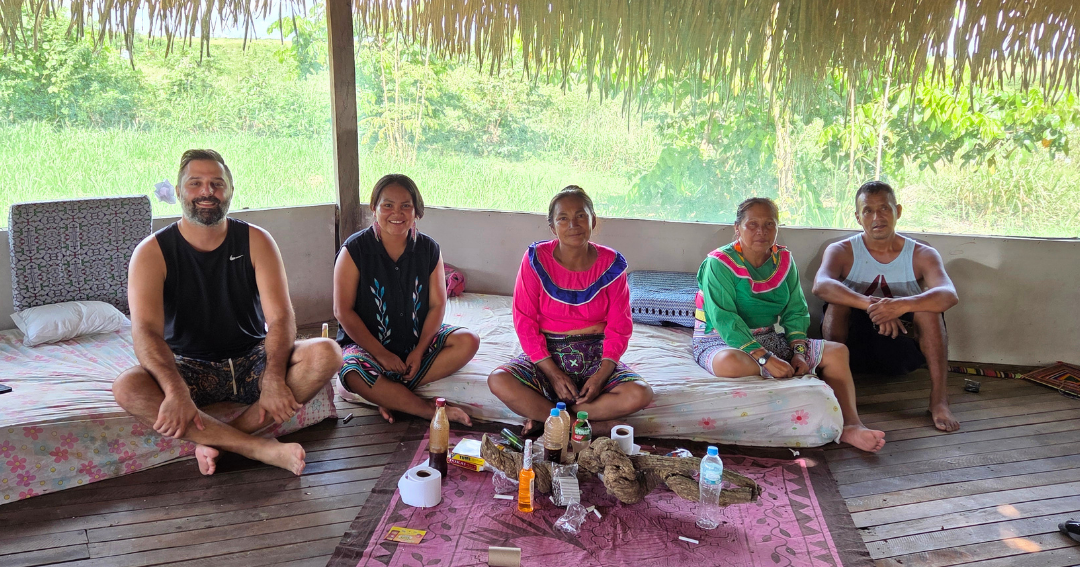
Peru is the source. The brew itself, the Ayahuasca vine, Banisteriopsis caapi, combined with the leaves of the Chacruna plant, Psychotria viridis, was shaped over generations by the indigenous communities of the Amazon basin, including the Shipibo people of Pucallpa. Go to Peru, and you're in the place where curanderos trained for a lifetime inside that exact tradition.
Las Vegas doesn't try to be a stand-in for that. What 963 Tribe Church does instead is carry the tradition itself into a different setting. Ceremonies still follow Shipibo guidance, still include icaros, the sacred healing songs sung during ceremony, and still rest on the same principle of ayni, sacred reciprocity with the earth. What's different is logistics: no international flight, no jungle travel, no week away from your life. Just a dedicated ceremonial space built for this purpose, right in the city.
So the medicine and the lineage aren't the trade-off. Distance is. And so is what happens in the weeks after ceremony ends, which matters more than most people expect going in.
Why Bring a Peruvian Lineage to a City Like Las Vegas?
963 Tribe Church describes its foundation plainly: rooted in the teachings of the Shipibo lineage, one of the oldest and most respected spiritual traditions of the Peruvian Amazon. Instead of asking every seeker to make that trip themselves, the church built a home for that lineage in Las Vegas, with the same reverence and the same ceremonial roots, but a different address.
That home comes with a legal backbone most retreat centers abroad simply don't have for U.S. residents. 963 Tribe Church operates as a 501(c)(3) non-profit under the 508(c)(1)(A) provision, protected by the First Amendment and structured around the Religious Freedom Restoration Act (RFRA). The church is specific about this: sacraments are used strictly within ceremonial settings, never recreationally, and attendance and usage records are kept to support the sincerity of the practice.
Peru has its own legal treatment of ayahuasca, tied to its cultural heritage. But that protection stays in Peru. The moment a U.S. resident lands back home, they're under U.S. law again, full stop. A ceremony held through 963 Tribe Church is built from the ground up to operate within that reality, continuously, not just for the length of a trip.
What's Behind the Name "963 Tribe"?
It's not arbitrary. 963 Hz is one of the Solfeggio frequencies, and the church refers to it as the "God frequency" for its association with the crown chakra; in their belief system, it is a gateway to divine connection. Put simply, 963 Tribe translates to "God's Tribe."
That frequency ties directly into the icaros sung in the ceremony, songs passed down through the Shipibo people, channeled from the sacrament itself, used to move energy and hold the space. The church's own music, built around these icaros, is available on all major streaming platforms, and ceremony updates get posted regularly on Instagram.
What Actually Happens During a Las Vegas Ceremony?
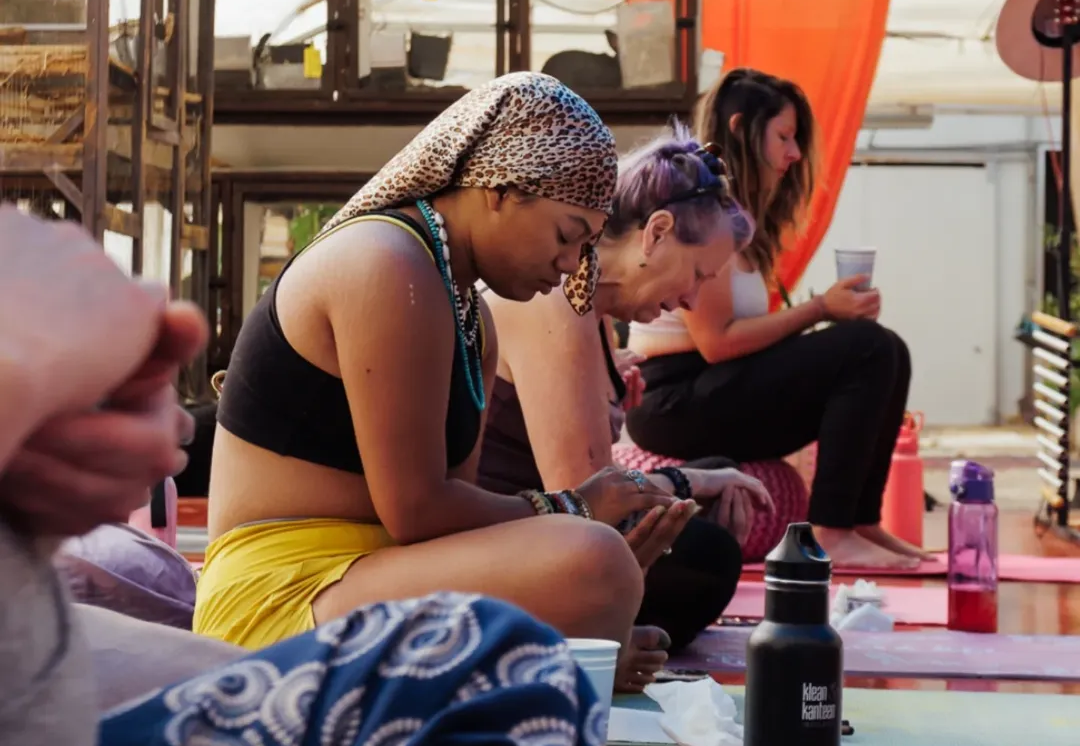
Unlike a single, concentrated retreat abroad, a ceremony with 963 Tribe Church fits into an ongoing rhythm. Their calendar, for example, lists an Ayahuasca Ceremony on August 28–30, a San Pedro Ceremony on September 20, and a Community Potluck and Integration gathering on September 9. Ceremony, then integration, then community, repeating month after month.
Facilitators walk participants through preparation, hold the ceremony itself, and stay involved afterward. The church states it's maintained a 100% safety record, built on pre-screening participants, having emergency protocols and trained facilitators present, and requiring a healthcare check-in before anyone participates.
One thing worth knowing: taking the sacrament isn't required to belong. People join for the community events, the integration circles, and the potlucks, some without ever sitting in ceremony at all.
Las Vegas or Peru: How They Actually Compare
963 Tribe Church (Las Vegas) | A Retreat Center in Peru | |
Lineage | Shipibo teachings from Pucallpa, transmitted directly | Shipibo or other Amazonian lineages practiced at their origin |
Legal basis | U.S. 501(c)(3) religious institution under 508(c)(1)(A), operating within RFRA | Regulated under Peruvian law and local recognition of traditional medicine |
Getting there | Local, no flights, no visas | International travel and jungle-area logistics |
Community | Recurring local ceremonies, potlucks, and gatherings | Usually one concentrated retreat window |
Support afterward | Facilitator-led integration circles held on an ongoing basis | Depends on the center; often ends when the retreat does |
Cost structure | Voluntary, non-refundable donations toward ceremony and church initiatives | Typically a paid retreat package |
Is This Actually Legal?
Here's where the church is unusually direct. Its ceremonies operate under a 501(c)(3) religious non-profit structure and the 508(c)(1)(A) provision, protected by the First Amendment and guided by RFRA. Sacraments are used only in religious ceremonial settings, never outside them, with records kept of attendance and use.
But the church doesn't oversell this. Every participant signs a liability waiver acknowledging that participation is voluntary and carries personal risk, and the church says outright: "personal legal protection is not guaranteed, as the use of plant sacraments is subject to evolving legal frameworks." That kind of honesty is rare, and it's worth noticing.
Getting Ready for Ceremony
Preparation isn't something you do the night before. It starts weeks out, and it touches the body, the mind, and the spirit.
On the physical side, participants gradually shift their diet in the lead-up to the ceremony, moving toward lighter, less processed food. Any medications or health conditions get disclosed privately to facilitators, and medical clearance from a personal healthcare provider is required beforehand, since certain conditions and medications don't mix safely with the sacrament.
Mentally and spiritually, it's about setting an intention and then loosening your grip on how that intention plays out. Journaling, meditation, or just stepping back from the noise of daily life, news, social media, and arguments helps clear space before walking in.
On the day itself: stay hydrated, eat your last meal at least six hours out, and show up on time and present, without the distractions of the outside world in tow.
The full breakdown, including the specific medication timelines that need to be reviewed with a doctor, lives on the church's Ayahuasca page and Resources page, and facilitators walk every participant through it individually before they register.
What Happens Once the Ceremony Ends
This is where staying local really pays off. Integration at 963 Tribe Church isn't a one-time wrap-up conversation; it's built into ongoing church life. Facilitator-led circles and one-on-one sessions help participants work through what surfaced, supported by journaling and community discussion. The Integration page lays out how this continues well past ceremony night.
The church also recommends easing back in slowly afterward, regular food gradually, less exposure to crowds or heavy media, and holding off on big life decisions until things settle rather than acting on them the next morning.
Retreat centers in Peru can offer integration too, but it varies a lot by center, and once you're home, that support usually isn't nearby anymore. With 963 Tribe Church, the same facilitators who held your ceremony are the ones running the integration circle the following week.
So, Which One Fits You?
If what draws you is the Amazon itself, being physically present where this tradition took root, Peru offers something no U.S.-based ceremony can replicate. That pull is real, and for some people, it's the whole point.
If what you want is the same Shipibo-guided structure without leaving the country, plus a community you can return to every month rather than once, 963 Tribe Church's Las Vegas ceremonies were built for exactly that. The church describes ayahuasca as capable of deep emotional and spiritual healing, and frames a single ceremony as potentially comparable to years of psychotherapy or meditation, a belief that comes from Shipibo teaching, not a medical claim, and one worth discussing directly with facilitators before deciding anything.
Take a look at the church's Beliefs, Shipibo Lineage, and upcoming Calendar pages to get a fuller picture before choosing between the two.
Key Takeaways
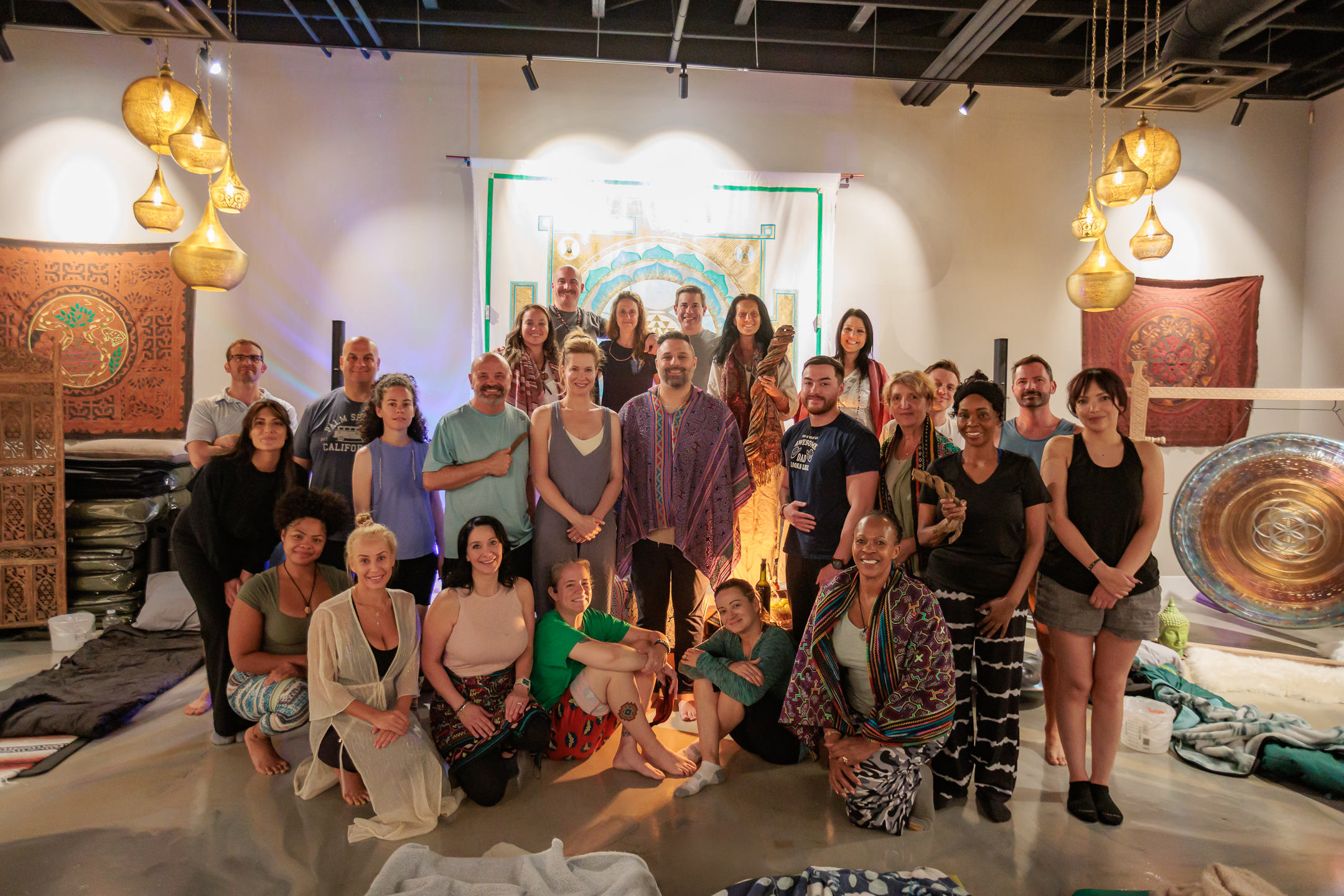
963 Tribe Church brings Shipibo ceremony, icaros, plant sacrament, and curandero-trained teachings to Las Vegas, so the tradition is reachable without a trip to Peru.
The church runs under RFRA and First Amendment protections as a 501(c)(3) religious non-profit but is upfront that personal legal protection isn't guaranteed.
Preparation covers body, mind, and spirit, always alongside facilitator support and required doctor clearance.
Integration keeps going after the ceremony through ongoing circles and events, a real advantage of staying local instead of doing one trip abroad.
You don't have to take the sacrament to be part of the church community.
A Few Common Questions
Is this the same tradition practiced in Peru?
Yes, ceremonies follow Shipibo guidance from Pucallpa, including the icaros and traditional sacrament preparation, just held in a Las Vegas setting.Do I have to go to Peru for an authentic ceremony?
No. The lineage and ceremonial structure travel with 963 Tribe Church, so you can experience it locally.Is it legal to participate?
The church operates under religious protections tied to RFRA and the First Amendment, and is clear that it doesn't guarantee individual legal protection; participants sign a waiver acknowledging that.Do I have to take the sacrament to join the church?
No. Community events, potlucks, and integration circles are open to anyone, sacrament or not.What kind of support is there after ceremony?
Facilitator-led integration circles and one-on-one sessions, plus regular community gatherings to help things settle over time.
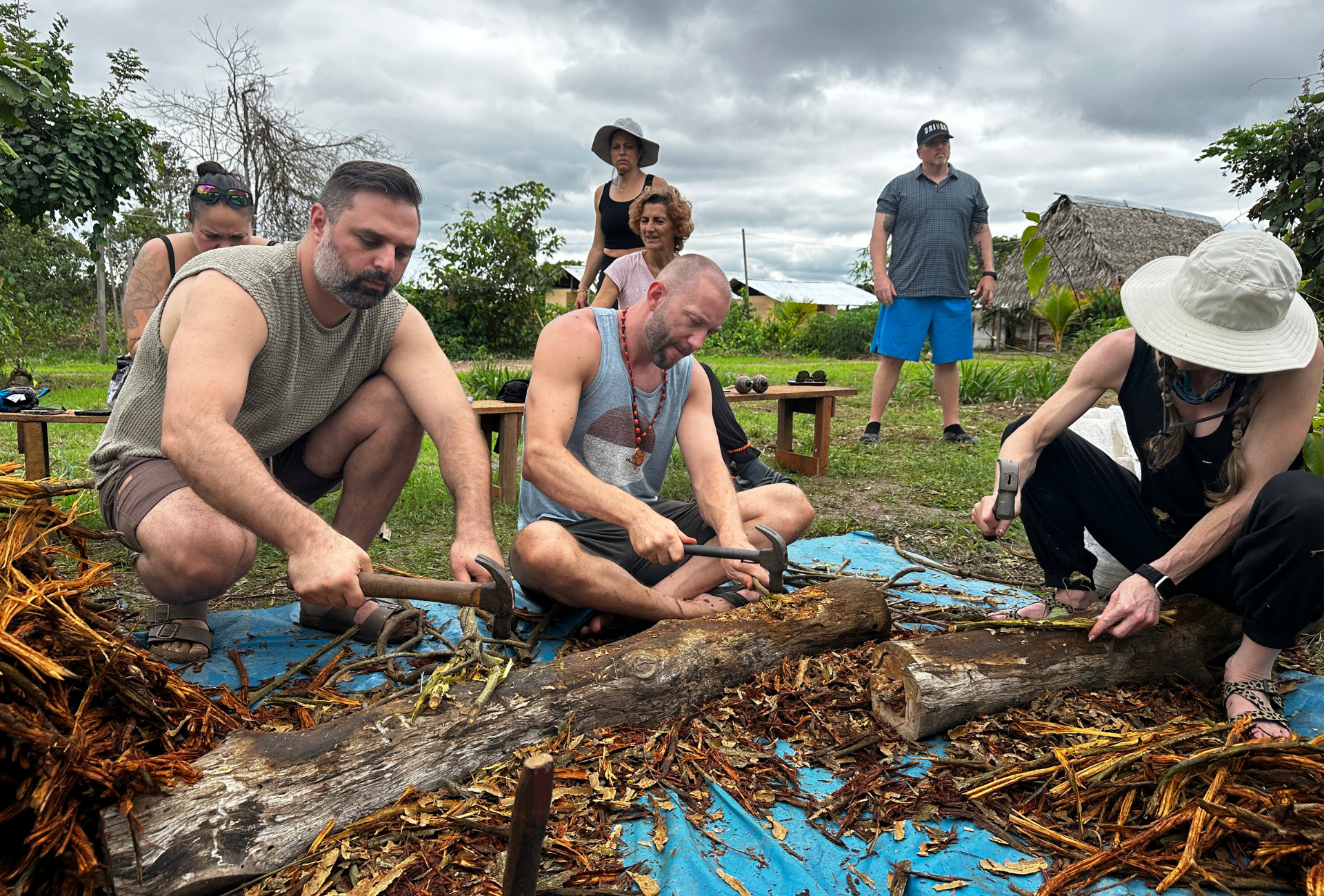
This piece draws entirely from 963 Tribe Church's own published pages, About, Beliefs, Ayahuasca, Shipibo Lineage, and FAQ. Learn more at 963tribe.com, watch the church's teachings on YouTube, or follow ceremony updates on Facebook and Instagram.
